Modular Design: The Secret to Agile & Future-Proof Automation Systems.
Future-Proofing Your Factory: How Modular IPCs Drive Agility in Industry 4.0
In the fast-paced world of Smart Manufacturing, the only constant is change. As factories transition to Industry 4.0, the demand for higher computing power, Edge AI integration, and seamless data visualization is skyrocketing. For System Integrators (SIs), the challenge is no longer just about installing a computer; it’s about building a system that can evolve.
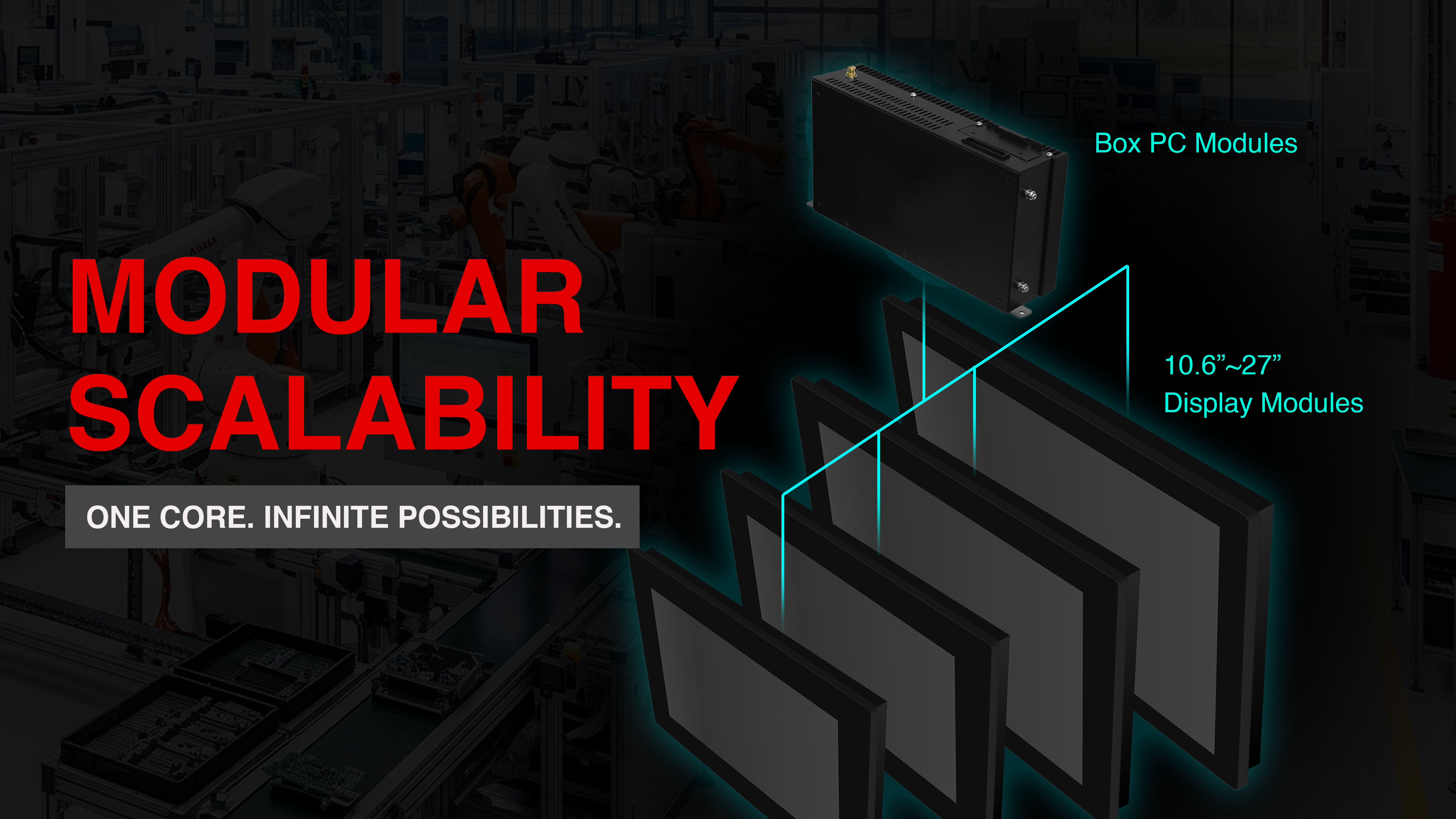
Traditional hardware often creates a bottleneck. When software requirements grow, the hardware must be ripped out and replaced. However, a new standard is emerging to solve this: Modular IPC Design. By separating the computing engine from the display unit, businesses can finally achieve the agility required for modern automation.
1. Effortless Scalability for Edge AI
The rise of Edge Artificial Intelligence has changed the game. Today’s industrial applications—ranging from automated optical inspection (AOI) to predictive maintenance—require significantly more processing power than standard SCADA systems of the past.
In a modular ecosystem, upgrading is no longer a "total loss" event. If your application requires a jump from an entry-level processor to a high-performance Edge AI engine, you simply swap the Box PC Module. There is no need to disturb the large, expensive display panels embedded in your machinery or control walls. This decoupled upgrade path ensures that your factory remains at the cutting edge of technology without the prohibitive cost of full-scale hardware overhauls.
2. Inventory Simplification: One Core, Infinite Configurations
Logistical complexity is a hidden profit killer for System Integrators. Managing various spare parts for different machine configurations—each requiring a specific screen size and CPU combination—leads to bloated inventory and capital tie-up.
Modular design introduces the "One Core" strategy. SIs can standardize a single, powerful Box PC module that is compatible with a full fleet of displays, from 10-inch HMIs to 21.5-inch control monitors. This standardization allows you to respond to client needs faster while carrying significantly less inventory. Instead of stocking fifty different models of All-in-One PCs, you stock a handful of interchangeable modules that can be mixed and matched on-demand.
3. Future-Proofing the Lifecycle
The lifecycle of a display panel and a CPU are rarely aligned. Industrial displays can often last a decade, while computing technology doubles in speed every few years. Modular architecture respects this reality. It allows you to maintain your visual infrastructure while continuously refreshing the "intelligence" behind the screen.
This approach doesn't just save money; it builds a sustainable, future-proof automation environment that can adapt to whatever the next decade of industrial innovation brings.
Ready to Optimize Your Total Cost of Ownership?
Understanding the technical shift is only the first step. To help you calculate the real-world impact on your bottom line, we’ve prepared an in-depth guide for industry professionals.