The Interlocking Strategy: Why Modular Architecture is the Future of Industrial Computing
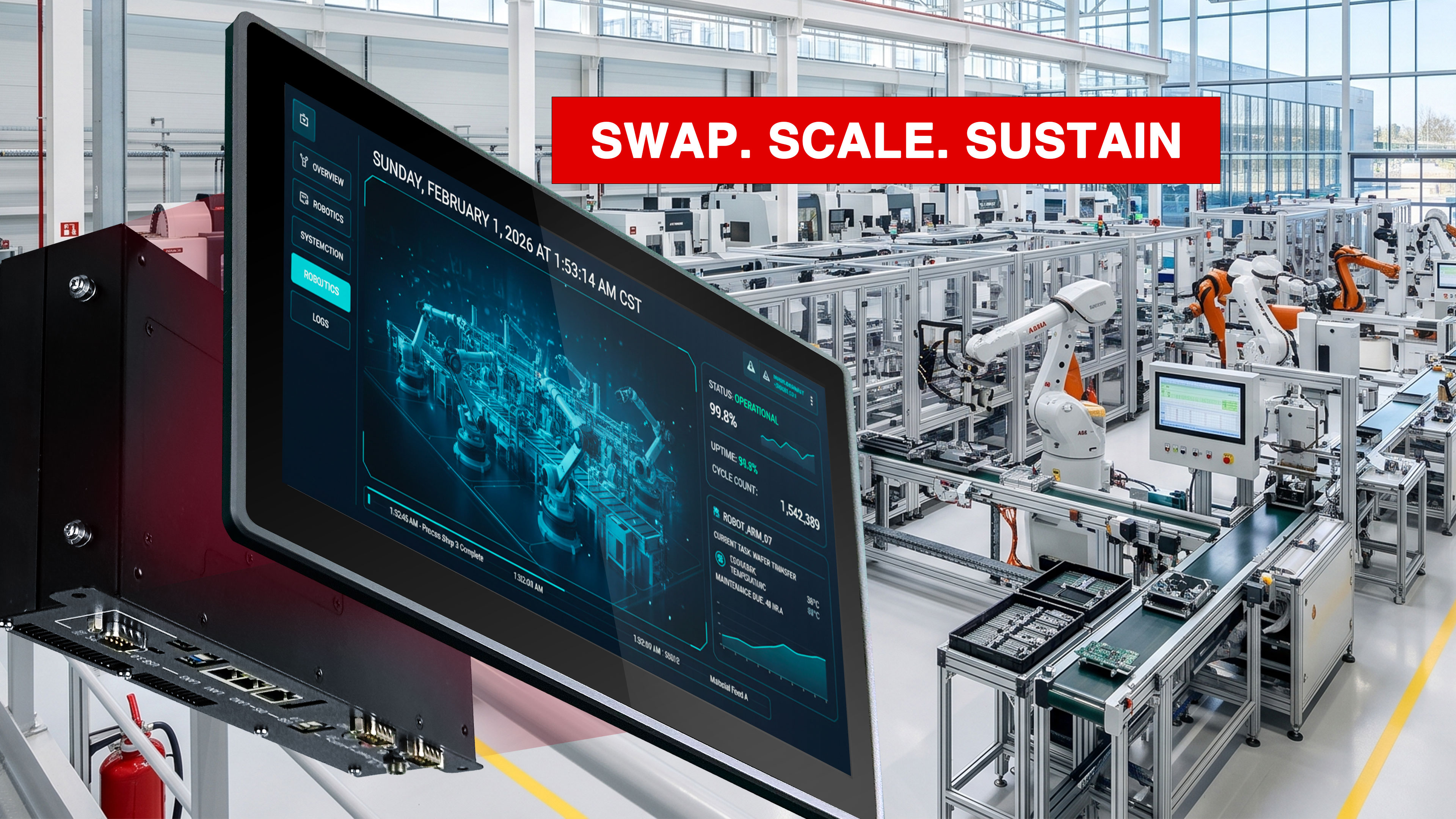
In our previous discussion, we explored the "Maintenance Trap"—the hidden financial drain caused by traditional All-in-One (AIO) industrial computers when a minor component failure forces a total system replacement. Today, we shift our focus from the problem to the solution. To stay competitive in the rapidly evolving European smart factory landscape, the industry is moving toward a more agile, Lego-like approach: Modular IPC Design.
Separating the "Brain" from the "Face"
The core philosophy of modular design is simple yet revolutionary. Instead of a single, rigid unit, the hardware is split into two independent modules:
-
The Display Module: This is your primary interface, ranging from 10" to 21.5". It is built to endure the physical rigors of the factory floor, featuring IP65/66-rated protection against water and dust.
-
The Box PC Module: The "Brain" of the operation. This unit contains the CPU, memory, and specialized I/O (such as COM, LAN, or PoE) required to drive automation and Edge AI tasks.
Three Strategic Advantages for System Integrators
1. Rapid Field Recovery (The 3-Minute Swap) In a traditional setup, a cracked screen or a failing backlight could lead to hours of downtime as the entire system is dismantled. With a modular architecture, a field technician can swap the Display Module in under 3 minutes while keeping the Box PC—and all its sensitive data and software configurations—untouched. This drastically reduces the Mean Time to Repair (MTTR) and lowers labor costs significantly.
2. Seamless Scalability (Future-Proofing Your ROI) Industrial software demands are constantly increasing, especially with the integration of AI-driven inspection. In a modular ecosystem, upgrading your computing power doesn't mean discarding your expensive displays. You simply replace the Box PC module with a higher-performance version, keeping your existing infrastructure intact. This decoupled upgrade path ensures that your hardware investment remains relevant for much longer.
3. Inventory and Logistics Optimization Managing a vast array of spare parts for different screen sizes and CPU combinations is a logistical nightmare. Modular design allows SIs to standardize on a few core computing modules that can be paired with any screen size. This reduces inventory overhead and simplifies the supply chain, allowing for faster response times to client needs.
Conclusion: Efficiency by Design
The shift to modularity isn't just about hardware; it's about shifting the operational mindset from "disposable rigidity" to "sustainable flexibility." By choosing a modular architecture, European SIs can offer their clients a system that is easier to maintain, faster to upgrade, and significantly more cost-effective over its entire lifecycle.