The Hidden Cost of "All-in-One": Why Traditional IPCs are Killing Your ROI
In the competitive landscape of European industrial automation, System Integrators (SIs) and factory managers are under constant pressure to optimize Total Cost of Ownership (TCO). While the initial purchase price of an Industrial PC (IPC) often dominates budget discussions, there is a far more critical factor that often goes unnoticed: Maintenance Rigidity.
Most factories today rely on traditional All-in-One (AIO) architectures—where the display, touch interface, and computing core are integrated into a single, inseparable chassis. While this was once the industry standard, it has become a significant liability in the era of Smart Manufacturing.
1. The Single Point of Failure Trap
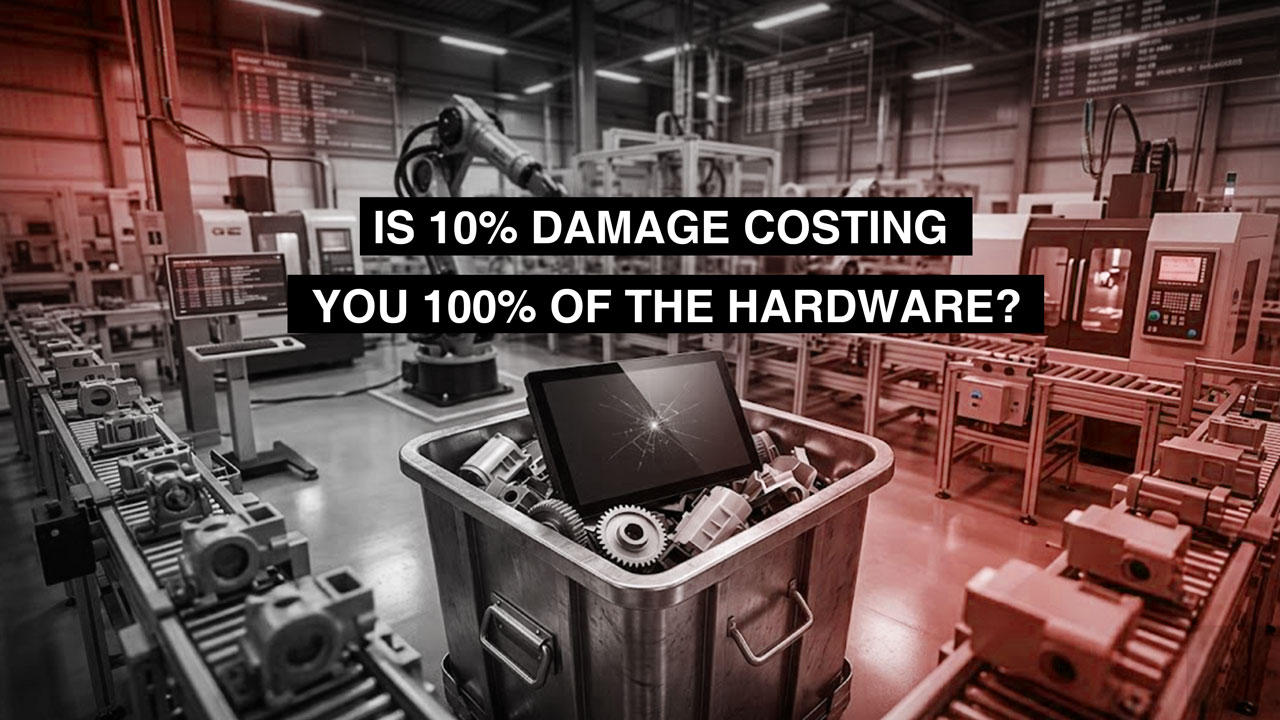
The most common issue with AIO systems is that a minor hardware failure often leads to a total system loss. Consider a scenario where a high-end HMI (Human Machine Interface) is deployed in a food processing plant. If the touchscreen is damaged by a chemical cleaner or physical impact, the entire unit—including the perfectly functional CPU, RAM, and storage—must be decommissioned. You aren't just paying for a new screen; you are paying to replace a computer that wasn't even broken.
2. Prohibitive On-Site Labor Costs in Europe
In regions like Germany, France, or the UK, the cost of dispatching a specialized technician for on-site repairs is exceptionally high. Replacing a traditional AIO unit requires dismantling mounting brackets, disconnecting multiple complex cables, and re-installing a bulky system. This process is labor-intensive and slow. When your hardware is "locked" into a single piece, every repair mission becomes a major financial and logistical operation.
3. The "Upgrade" Bottleneck
Technology moves fast. Today’s industrial software requires significantly more processing power than it did five years ago, especially with the rise of Edge AI and advanced data visualization. In a traditional setup, if you want to upgrade your computing power, you are forced to discard your expensive, high-quality display modules as well. This lack of scalability makes your infrastructure fragile and difficult to adapt to future demands.
Breaking the Cycle
The industry is reaching a tipping point. To stay agile, SIs need a hardware architecture that reflects the flexibility of modern software. The solution lies in separating the "face" (Display) from the "brain" (Computing Module). Only by moving away from integrated rigidity can we achieve the level of uptime and cost-efficiency required for the next generation of industrial excellence.